
By Al Drinkle
After all these years, it’s probably time to accept that my tastes will always be incongruous with the mainstream. I’m talking about wine here, but that statement is no less true when applied to music, film, literature, or any other discipline that I care deeply about. I’m often perplexed by what the masses gravitate towards, but it doesn’t bother me like it used to—everyone’s entitled to their own terrible taste, I tell myself.
Regarding wine, the case is slightly more complicated. It’s my vocation and along with my colleagues, we have the choice of either purveying and advocating for bottles that we believe in, or woefully attempting to anticipate what might carry the broadest possible appeal. Clearly the latter model could only be pursued dispassionately, and the course must be as fluid as fashion in order for it to succeed. Consequently, we choose to offer wines that we feel are worth drinking regardless of trends, and while acknowledging that we’re operating far outside of the mainstream, the ultimate hope is that our good taste will be contagious.
For many years, we’ve fought hard for the virtues of German Riesling. People began to catch on and at times it even felt like the momentum that we had accumulated might be signalling a shift in the general consensus towards the category. I never wanted it to be a trend, of course, nor am I naive enough to expect that it would resonate with the masses. I just want Riesling to find its place among the classics that people with good taste instinctively gravitate towards, and who knows if this will ever happen. There's still far too many connoisseurs and professionals who view it as a novelty, or too many who claim to harbour great respect for it but curiously never drink it. At least this helps to keep the wines affordable!
I first visited Weingut A.J. Adam in the spring of 2013. Among other revelations, I was completely destroyed by a dry Riesling from a plot of ancient, ungrafted vines in Piesport's Goldtröpfchen vineyard. Returning home, I shared my excitement with a fellow Riesling enthusiast who is my senior by several decades. While the wine was supernal, I bemoaned my lack of optimism to sell Calgary on a dry Riesling from the Mosel—the German region least associated with dry wine at the time—that would cost close to $90 per bottle. I may have lacked confidence, but I’m grateful that my interlocutor had faith in my assessment of the wine.
“Tell you what,” he said, “why don’t you ask Andreas Adam if he could spare you two cases to help justify the registration fees. I’ll buy one of them, you’ll need a couple of bottles for yourself, and then you’ll only be on the hook to sell eight or nine bottles. If it’s as good as you say, it should be easy.”
If it’s as good as you say, it should be easy. Well, it was pretty easy and from that day on I decided that my own enthusiasm was all that was required to initiate the importation of prospective wines. This worked until things got really expensive in certain categories, and then an additional factor of consideration would have to be at what point the price was too high for there to be any value left. You’ve seen it all around you—at grocery stores, record shops, lumber yards, everywhere.
Incredibly, the prices of A.J. Adam's top wines have held steady over the 13 years that we've been working together. We sold that 2012 Goldtröpfchen Trocken for $88, and you'll find the 2024 on offer below for $87. Can you think of another product on the entire fucking planet that's enjoyed similar pricing stability?!? To limit ourselves to wine, and to cite an egregious example, there's a Vosne-Romanée that was also available for $88 when we sold it 13 years ago, and the current vintage costs $465. Wine pricing can be completely arbitrary—often pulled directly out of someone’s butt—so don’t assume that an affordable bottle can’t stand amongst the greats, or even redefine what greatness entails. I wish it went without saying that outrageously high prices are likewise not guarantors of any measure of quality whatsoever.
What's my point? That's a good question, and I've almost forgotten myself… My point is that great German Riesling is a genuinely life-enriching enterprise that still maintains incredible value at many pricepoints. The fact that it's often the result of arduous steep-slope viticulture (see photos below) makes it even more mind boggling. No other category is simultaneously as delicious, ageworthy, terroir-transparent, and complex as German Riesling—and any that you might put forth as a challenger probably costs double or triple the price.
Adam's 2024 GGs were born in a frost vintage, and one in which ripening was not taken for granted. For example, the aforementioned Goldtröpfchen wasn't harvested until early November, but the aroma and flavour development that accumulated over this prolonged hang time is profound.
The four “Grand Cru” Rieslings below are qualitative equals but with starkly different characteristics. They are tantalising, soul-stirring conduits to the natural world that pull one of the most beautiful tricks that any agricultural product is capable of—namely, they vividly convey the disparate personalities of the respective sites from whence they grew, thereby combining intellectual and emotional intrigue with unbridled deliciousness.
2024 Häs’chen Riesling GG $82
“Häs’chen” means “little hare” and this tiny ungrafted vineyard—a monopoly of A.J. Adam—would be as cute as its name if it wasn’t so perilously steep. Though the increasingly warm summers have changed things, east-facing sites weren’t historically appreciated in the Mosel, and indeed, this vineyard yields Adam’s most glacial, citric, and electric dry wine. The '24 offers piercing clarity of aroma, leaning towards slate-sizzled lemon and bergamot, but also channels the first sunbeams of the day hitting a cool garden. Surprisingly for the vintage, the zippy mouthfeel is also merciful and maybe even caressing until a barrage of stones and lemon curd signal the wine’s long and promising future.
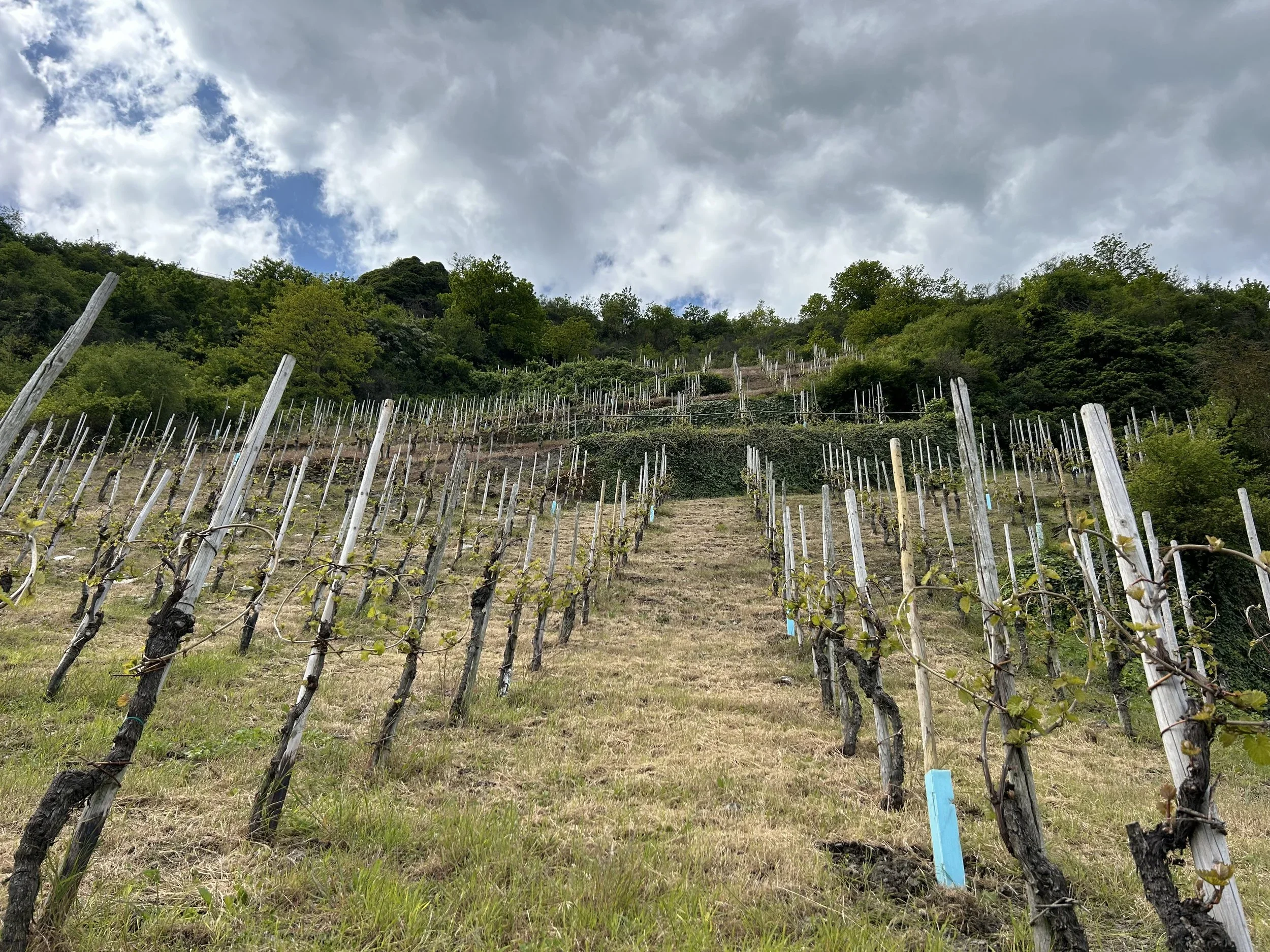
Häs’chen
2024 Hofberg Riesling GG $82
This is Adam’s home vineyard, the holdings of which make up the majority of the estate. This means that it’s the most readily available of the lineup, and also that it’s usually the most “complete” wine because there’s more land to draw from. It’s punishingly dry with lightning acidity rattling through a wine whose broad shoulders belies its 12% alcohol. Given all that, it also manages to be silky, although the aromas, flavours, and texture are somewhat mercurial in this infantile masterpiece. Hofberg’s red apple shimmer is a background note this year, eclipsed by apple blossom, vanilla cookie dough, basmati rice and a charming if severe blade of minerality. The finish lasts 5000 years (I timed it), and though the wine needs time, it will amply repay it.
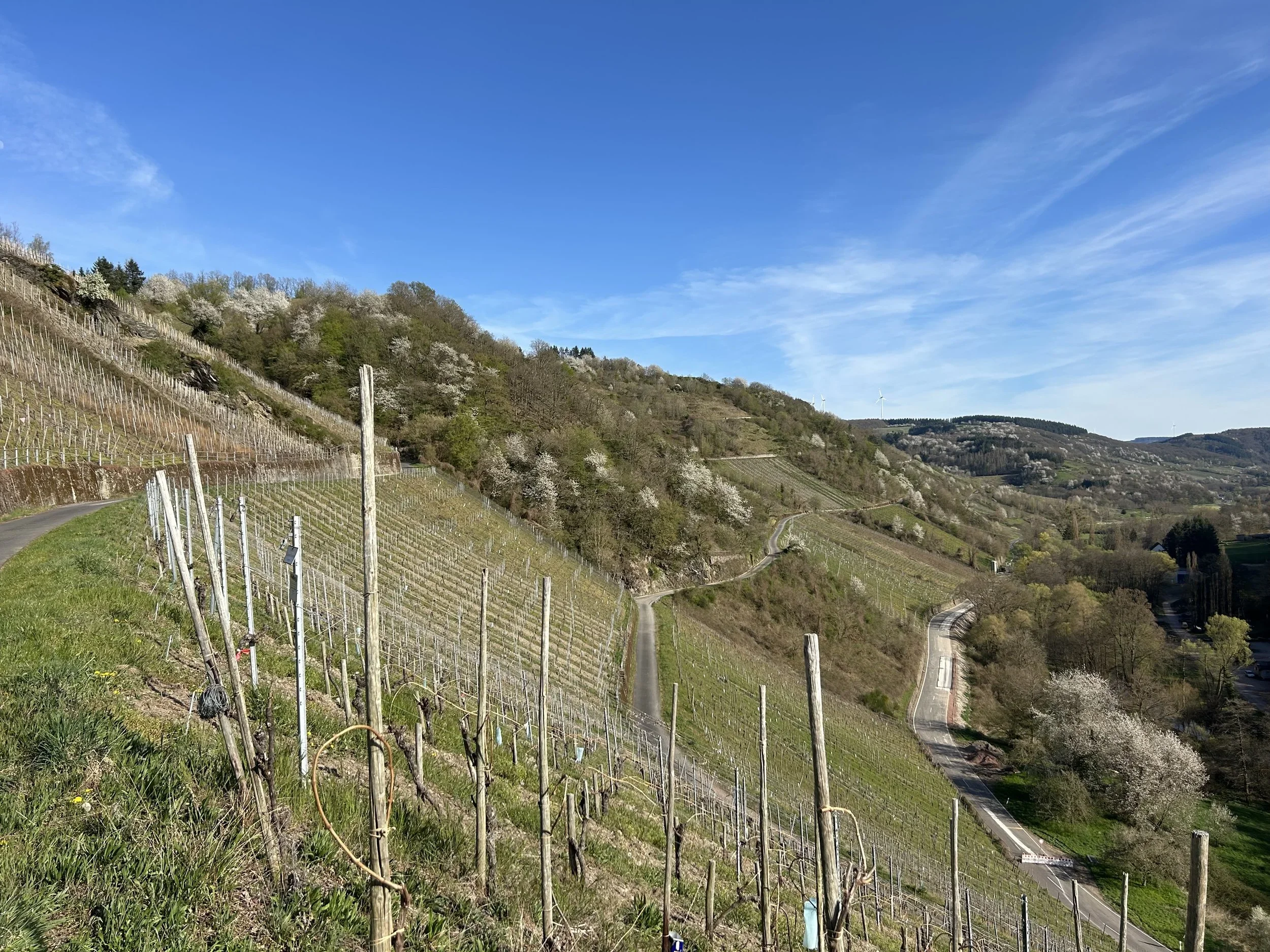
Hofberg
2024 Ohligsberg Riesling GG $87
As I wrote about the 2024 Kabinett from this vineyard, it usually takes site and vintner much longer to become acquainted in order to achieve this level of mastery. The fact that this, Adam’s sophomore bottling of Ohligsberg GG, is so insanely intricate and compelling can only be indicative of one of two things. The first option is that Weingut A.J. Adam and their Ohligsberg holdings have somehow expedited an achievement of synergy previously unseen by this writer. The other option is that their intimacy is still in its courting phase, and that within five or six more vintages, A.J. Adam’s Ohligsberg GG will be the greatest dry wine in Germany. As it stands, the 2024 is ravishing and noteworthy for its intoxicating walnut oil and alpine herbal aromatics, cubic tons of slate on the palate, and most of all for its incredible sense of serenity. I’m in awe of its daring yet seemingly effortless achievement of edginess, purity, and dazzling harmony.
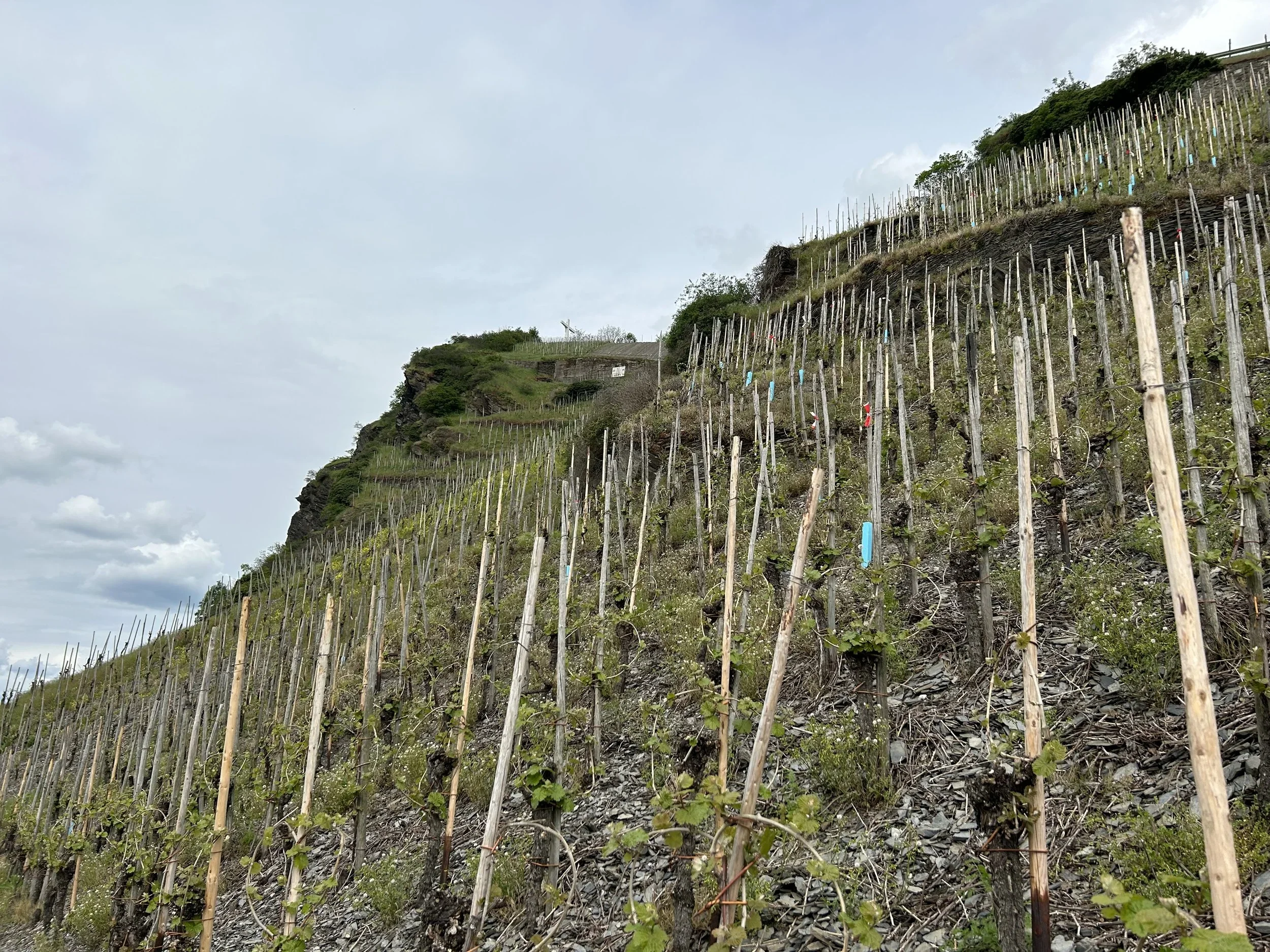
Ohligsberg
2024 Goldtröpfchen Riesling GG $87
A deeply sentimental wine for me, and one that’s frequently superlative except when its pendulum swings too far towards opulence. No risk of that in 2024, though, with this svelte sizzler only achieving ripeness late into autumn, by which time its aromas are a playground for fertile imaginations. For the synesthetes out there, the site's typical neon glow gives way to rainbow tones, along with an extroverted, carnal confidence—this Goldie gets its own float at the Pride Parade! Citric and herbal (more specifically, I might cite barely ripe oranges and marjoram), it’s a buzzing, digital, bone-dry shapeshifter that manages both conviviality and mystery. Stuff some bottles in your cellar to witness these qualities unfurl, shimmer and melt over a decade or two.
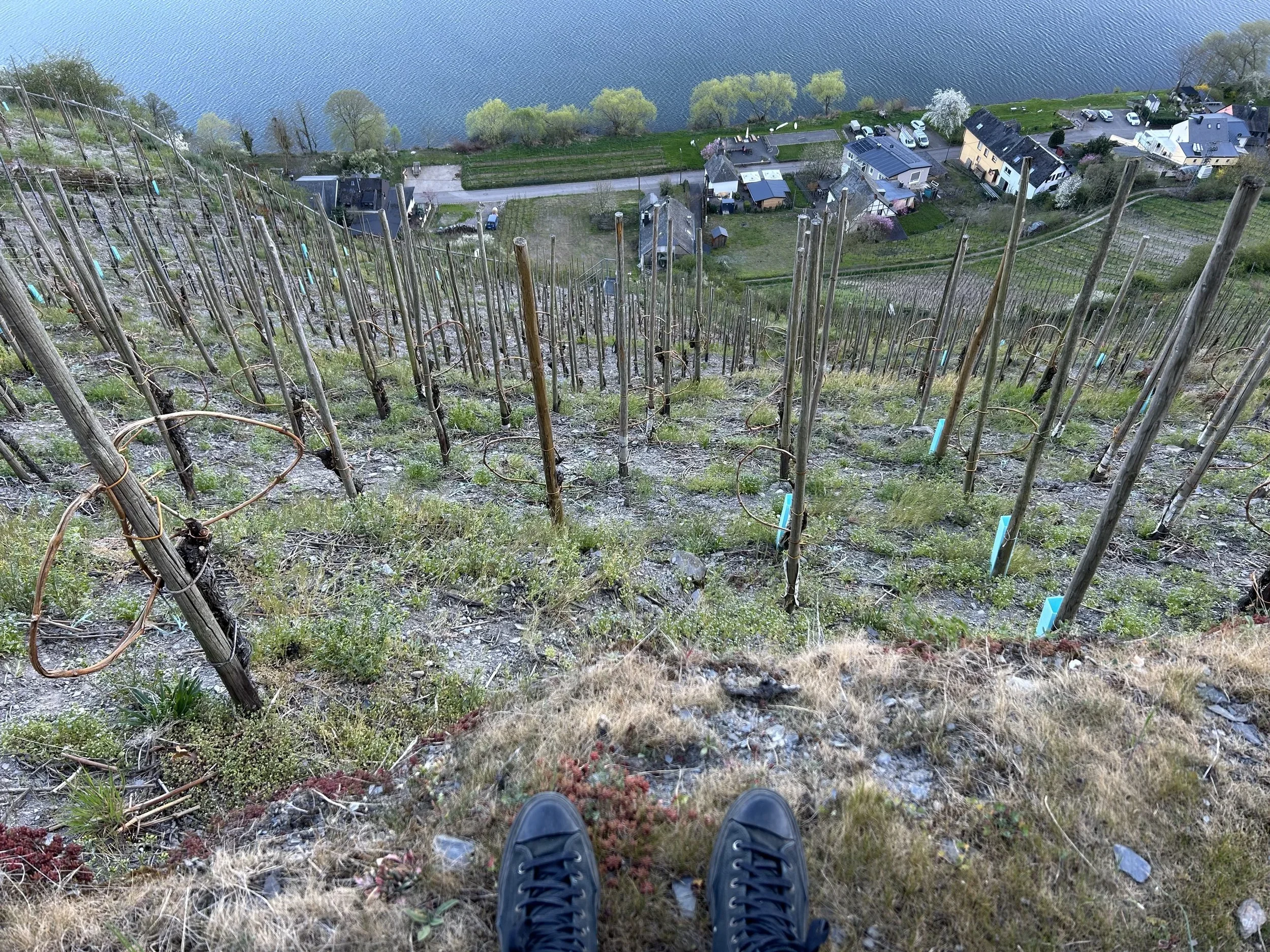
Goldtröpfchen
If you are interested in A.J. Adam’s 2024 GG Rieslings,
please contact us below:
